
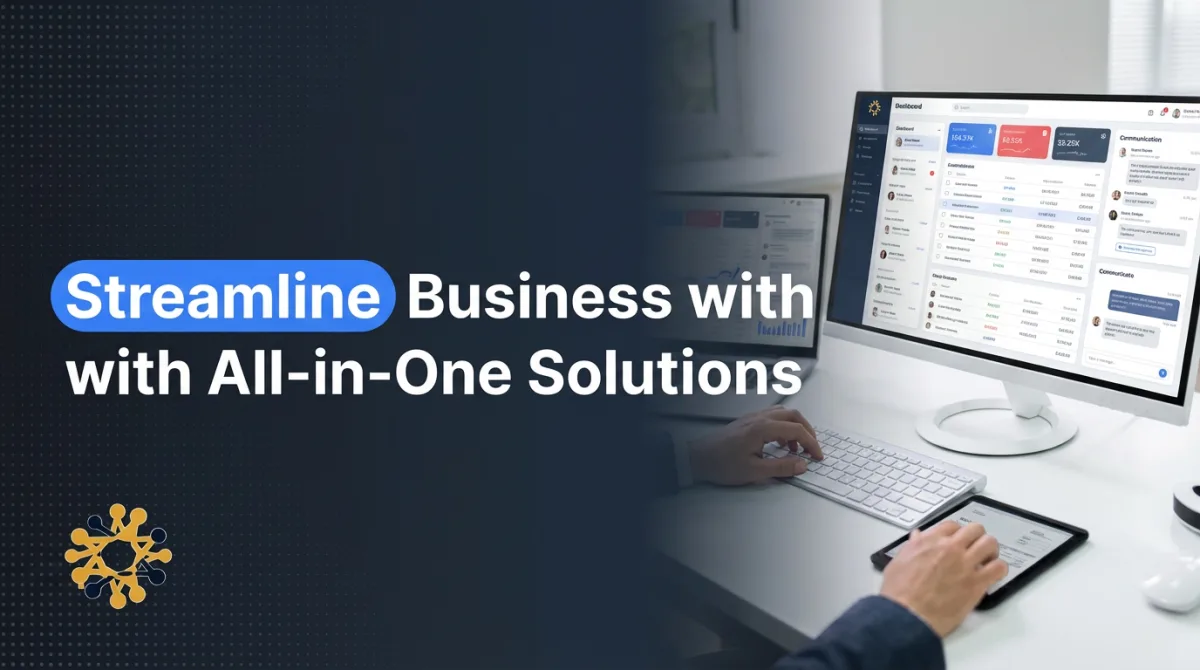
Are you constantly juggling a dozen different software tools just to keep your business running? If that sounds like your daily grind, you're not alone. Many small to medium-sized businesses find themselves caught in a complex web of disconnected systems, losing precious time and money in the process.
In 2026, the promise of true business efficiency isn't just a dream; it's a necessity. This guide will walk you through how embracing an all-in-one solution can transform your operations, helping you simplify, automate, and truly thrive.
Why is Juggling Multiple Business Tools So Problematic?
Juggling multiple business tools is problematic primarily because it creates data silos, reduces efficiency, and significantly increases operational costs and complexity for businesses. Each separate application often holds its own piece of critical information, preventing a unified view of customers or projects and forcing teams to waste time switching between systems.
The Hidden Costs of Disconnected Systems
Think about it: every separate subscription adds up, doesn't it? Beyond the direct financial drain, you're paying in lost time as your team navigates different interfaces, tries to remember which login belongs where, and manually transfers data from one system to another. It's like having a separate appliance for every single kitchen task, rather than one versatile food processor.
The Productivity Drain
Switching between applications isn't just annoying; it's a huge productivity killer. Research, as of early 2026, suggests that employees can lose up to an hour a day just context-switching. That's valuable time that could be spent on higher-value activities like engaging with customers or developing new strategies. This constant back-and-forth also leads to frustration and burnout.
Fragmented Customer Experiences
When your sales team uses one CRM, marketing uses another email platform, and customer service relies on a third ticketing system, what happens to the customer? Their journey becomes fragmented. They might have to repeat information, receive inconsistent messages, or feel like your company doesn't truly know them, which can severely impact satisfaction and loyalty.
Aspect | Multiple Disconnected Tools | All-in-One Solution |
|---|---|---|
Data Management | Data silos, manual transfers, integration headaches | Centralized data, single source of truth, no integration issues |
Cost Efficiency | High subscription costs for individual tools | Lower overall cost, value-packed single subscription |
Productivity | Context switching, manual tasks, reduced focus | Streamlined workflows, automation, increased team focus |
Customer Experience | Fragmented interactions, inconsistent messaging | Seamless, consistent, and personalized engagement |
What Exactly is an All-in-One Business Solution?
An all-in-one business solution is a single, integrated software platform designed to consolidate various essential business functions, such as customer relationship management (CRM), sales automation, marketing, and project management, into one cohesive system. Its primary goal is to eliminate the need for multiple disconnected tools, providing a unified environment for managing all core operations.
More Than Just a CRM
While CRM is often a core component, modern all-in-one platforms go far beyond simple contact management. They typically integrate a suite of tools, including email marketing, SMS communication, smart scheduling, workflow automation, and even AI-powered assistance. This comprehensive approach means you can manage leads, automate tasks, engage with customers, and track performance all from one dashboard.
Key Takeaway: An all-in-one solution isn't just about convenience; it's about creating a single source of truth for your entire business, fostering consistency and eliminating redundant efforts.
How Can an All-in-One Platform Streamline Your Operations?
An all-in-one platform streamlines operations by centralizing data, automating repetitive tasks, and providing integrated tools for managing customer relationships, sales, and marketing from a single interface. This consolidation drastically reduces manual effort, improves data accuracy, and fosters better team collaboration across all business functions.
Centralized Customer Management (CRM)
Imagine having every customer interaction, every email, every call, and every purchase history in one place. That's the power of a centralized CRM within an all-in-one solution. This complete 360-degree view allows your team to understand customer needs instantly, personalize interactions, and provide exceptional service, every single time.
Automating Sales and Marketing Workflows
One of the biggest game-changers for businesses is automation. An all-in-one platform can automate lead nurturing sequences, follow-up emails, appointment reminders, and even internal task assignments. This frees up your sales and marketing teams to focus on strategy and building relationships, rather than getting bogged down in repetitive administrative work.
Enhancing Communication and Collaboration
With all your business data and tools in one place, team collaboration becomes seamless. Everyone works from the same playbook, has access to the latest information, and can communicate effectively within the platform. For instance, a platform like ThriveBase consolidates contact, lead, and pipeline management with team collaboration features, ensuring shared customer data and communication history are always accessible.
What Role Does AI Play in Modern All-in-One Solutions?
AI plays a transformative role in modern all-in-one solutions by automating complex tasks, providing predictive analytics, personalizing customer interactions, and offering intelligent assistance across sales, marketing, and customer service functions. It essentially makes your business platform smarter and more proactive.
AI for Smarter Lead Management
Forget manually sifting through leads. AI-powered tools within all-in-one platforms can analyze lead behavior, score their potential, and even predict which leads are most likely to convert. This means your sales team focuses their energy on the most promising prospects, significantly boosting conversion rates.
Personalized Customer Engagement with AI
From AI-powered chatbots that offer instant support to email assistants that help craft perfectly tailored messages, AI elevates customer engagement. It ensures that every customer interaction feels personal and relevant, strengthening relationships and driving loyalty. This level of personalization, once reserved for enterprise giants, is now accessible to businesses of all sizes.
Boosting Team Productivity with AI Assistance
AI isn't just for customer-facing roles. It can assist your internal teams with tasks like call transcription, drafting reports, and even identifying workflow bottlenecks. This kind of internal AI assistance, featured in platforms like ThriveBase, allows your employees to focus on strategic thinking and creative problem-solving, rather than mundane tasks.
How Do You Choose the Right All-in-One Solution for Your Business?
Choosing the right all-in-one solution involves carefully assessing your specific business needs, considering the platform's scalability for future growth, evaluating its ease of use for your team, and understanding its pricing structure to ensure it aligns with your budget. It's about finding a tool that fits your unique operational rhythm.
Assessing Your Business Needs
List the tasks that currently slow the team down: capturing a lead, finding a conversation, assigning a follow-up or updating a deal. Use those tasks as the requirements for your trial.
Scalability and Flexibility
Your business isn't static, and neither should your software be. The best all-in-one solution will scale seamlessly with you, whether you're adding new team members or expanding into new markets. Look for platforms that offer flexible plans and customizable options, allowing the system to evolve alongside your growth.
Ease of Use and Rapid Deployment
Ask a few team members to complete a real task in the trial. Note where they need help, how long setup takes and which parts of the workflow need additional configuration.
If you're looking to simplify your business operations, consider exploring platforms that offer comprehensive features without the complexity. Taking a structured approach to evaluating your options can save you significant time and resources in the long run.
What's the Bottom Line?
In a world where efficiency dictates success, embracing an all-in-one business solution isn't just an advantage—it's essential. These platforms offer a powerful way to consolidate disparate tools, automate critical processes, and gain a holistic view of your customer journey. Here are the key takeaways:
Eliminate Tool Sprawl: Replace multiple subscriptions with a single, integrated platform to save money and reduce complexity.
Boost Productivity: Streamline workflows and automate repetitive tasks, freeing your team for higher-value activities.
Enhance Customer Experience: Centralized data ensures consistent, personalized interactions across all touchpoints.
Leverage AI: Utilize intelligent automation and insights to make smarter decisions and personalize engagement.
Scale with Ease: Choose a flexible platform that grows with your business without requiring extensive technical know-how.
Frequently Asked Questions
How quickly can I get started with an all-in-one business platform?
Allow time for data cleanup, imports, permissions and channel connections. Start with a small pilot before moving all records or asking the whole team to switch.
Do I need technical skills to use these types of platforms?
Not at all. The best all-in-one solutions are built with busy business owners in mind. They feature intuitive, user-friendly interfaces that allow you to manage your operations effectively without needing any coding or advanced technical skills.
What makes an all-in-one platform different from just using a CRM?
ThriveBase combines contacts, leads, conversations, calling and pipeline work. Whether it can replace another tool depends on your requirements and configured channels; keep specialist systems where they are still needed.
Can these platforms integrate with my existing business tools?
Check the integrations information and test each required connection. Confirm supported actions, transferred fields, sync direction and any additional cost before committing.